
Tarot Cards Meaning: Understanding the Symbolism and Guidance of the Deck
Summary
Tarot cards are more than mere tools of divination; they’re a symbolic language designed to be read with sensitivity to life’s challenges, emotions and spiritual growth. The cards have a story or message on the back that gives you an insight of what is going on in your life. The deck is separated into Major Arcana that illustrates transformative moments and archetypes while the Minor Arcana focuses on everyday concerns of our reading (such as relationships, work challenges, and creativity). By learning about the tarot card meanings, you can learn to see what possibilities the future provides but also gives a mirror reflecting your past and your own present.
Your Tarot Reading
Understanding the Major Arcana
The Major Arcana – which includes such iconic figures as The Fool, The Magician, The Lovers and The Star – contains 22 cards. These cards represent spiritual teachings, personal grow, or poignant experiences in life.
- The Fool card represents a fresh start, enthusiasm, and a leap of faith.
- The Magician signifies individual power, resourcefulness and activity.
- The Lovers tackles relationships, decisions and moral musing.
- The Star brings hope, inspiration, and renewal after challenges
Even one Major Arcana card can shed so much light on big, life themes, helping to shape decisions and prompt us to consider the bigger picture of a situation as opposed to instant reaction.
Understanding the Minor Arcana
The Minor Arcana is divided into 56 cards in four suits:
- Cups – feelings, relationships and emotions
- Pentacles – money, job and security
- Swords – thoughts, problems and clarity of the mind
- Wands – creativity energy ambition
The numbered cards (1-10) describe stages or cycles in life, and the court cards (Page, Knight, Queen, King) may stand for people or personality characteristics who are affecting your situation.
Example interpretations:
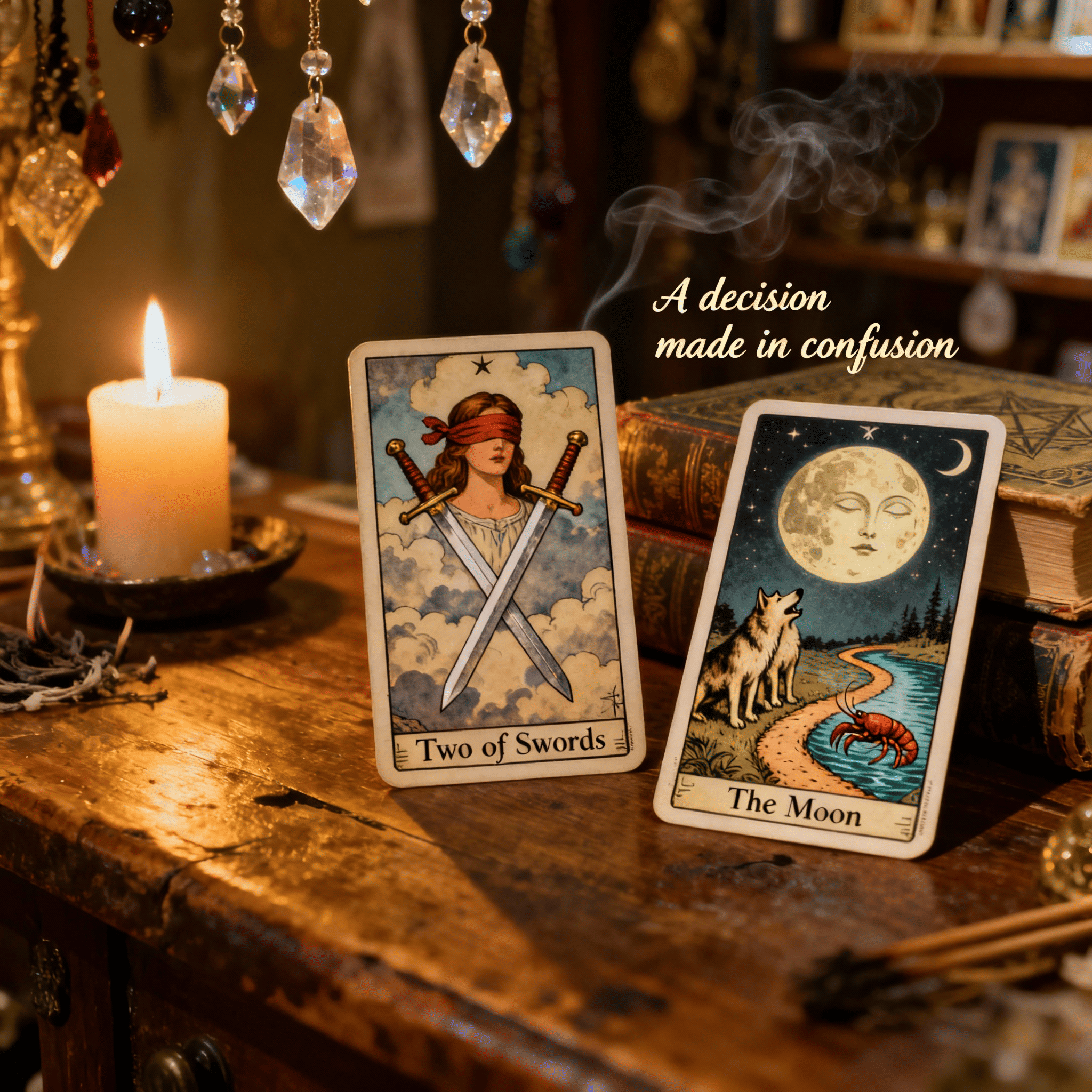
Two of Swords + The Moon – A decision made in confusion.
Ten of Cups + The Sun – emotional satisfaction and joy in human relations
Keywords and combinations are crucial: it’s often through the way cards interact with one another that they deliver more nuanced messages than one-card interpretations.
How Tarot Cards Speak to Everyday Life
They are not simply abstract symbols – they are highly relatable to our everyday lives, choices and emotions. “I pull the Two of Cups often on a busy morning and it’s just like, ‘Hey, remember to foster connection’ or ‘Remember to honor this person in your life,” Ms. Burton said. As an example, if you pull the Five of Pentacles on a hectic day at work, it could mean that your struggles are momentary and you should resist distress and focus instead.
Every card can function as a little story or scene, prompting you to pause and take notice of what’s going on inside and around you. After a while, you start to see patterns: certain cards pop out when you’re dealing with the same kind of issues or if emotions are running high. Tarot serves as a sort of mirror, revealing how your thoughts, emotions and choices are tangled up in the story line of life.
This method is a good reminder that tarot is experiential – more about noting and feeling and connecting than about adhering to rigid definitions. Now, through studying the subtle metaphors and signs in these cards and thoughtfully considering what they reveal, you can obtain a better sense of what is going on in your life or find answers to specific questions.
Free Astrology Consultation
Our top advisors:




People usually ask:
Tips for Beginners
- Concentrate on one set for a while: Master Major Arcana to explore life’s themes, then explore Minor Arcana to seek daily guidance.
- Keep a tarot journal: Record readings, patterns and repeat cards to build your intuition.
- Look at imagery and feelings: Do not make a memorization exercise out of meanings all at once.
- Practice easy spreads: Try a Three-Card Spread in order to feel more comfortable before tackling more advanced layouts.
Interpreting Tarot Cards Intuitively
And while it is important to follow traditional meanings, following your intuition is vital in tarot. Each card holds symbolic messages, but your connection to your imagery, colors and emotions is probably far more important.
- Trust first impressions: Notice what immediately draws your attention.
- Feel the card: Emotions evoked during a reading often guide interpretation.
- Observe card interactions: Patterns, contrasts, and repetitions reveal hidden layers.
- Visualize the story: Treat the card as a narrative reflecting your life or situation.
- Journal insights: Record both traditional and intuitive interpretations to strengthen understanding.
It is by mixing intuitive practices with symbolic knowledge that tarot becomes a living tool for self-reflection, personal development and guidance.
FAQ About Tarot Cards
There are 78 cards in total, consisting of two parts: the Major Arcana and the Minor Arcana.
Major Arcana is about big issues and archetypes, Minor Arcana concerns the everyday routine and personal development.
No, you just have to come with your intuition and your openness. Symbol knowledge deepens readings.
The tarot’s role is to serve as a guide.
The court cards are frequently people or aspects of character; the numbered cards reveal actions or cycles.
Absolutely. Thought, Introspection and Conscious Choice.
Just practice, and for that a Three-Card spread (past-present-future) would be good.
Yes. Context, spread position and intuition determine interpretation.
It can be hourly or daily, whatever makes sense to you. Consistency builds intuition.
Yes. Meditation, journaling astrology or crystals promote insights.