Ophiuchus Personality Traits
Picture someone standing between two worlds — the intensity of Scorpio behind him, the expansiveness of Sagittarius ahead — and you have a sense of what the Ophiuchus archetype represents. In informal astrology circles, the sign is described as a truth-seeker, drawn to transformation the way the constellation’s namesake, the serpent, is drawn to shedding old skin.
The serpent itself carries the symbolism here: a creature associated with duality, renewal, and hidden knowledge. Someone linked to this placement is often described as intuitive and perceptive, able to sense what others are feeling before it’s spoken. There’s a passionate, almost magnetic intensity attributed to this sign, paired with a genuine pull toward healing — both their own and other people’s, as described in Ptolemy’s Tetrabiblos, one of the foundational texts behind Western astrology’s character associations for the constellations bordering the ecliptic.
It’s worth being upfront that none of this is official Western astrology; these are informal interpretations that some astrologers and enthusiasts have built around the constellation’s mythology and position on the ecliptic. Read in that spirit, the internal contradiction between Scorpio’s depth and Sagittarius’s restlessness is often cited as the source of this sign’s inner tension — a mind pulled equally toward secrecy and toward exploration. The image of a person calmly holding a serpent captures this well: not fear of the chaotic or hidden, but control over it.
Positive traits (strengths)
- Intuitive — often senses what’s going on before anyone explains it
- Passionate — invests fully in whatever actually holds their interest
- Curious — skips past easy answers in favor of real understanding
- Determined — stays locked onto a goal once committed
- Transformative — comfortable changing shape rather than staying fixed
- Healing — carries a genuine instinct to support others through difficulty
- Perceptive — reads people and situations with real accuracy
Negative traits (weaknesses)
- Jealous — depth of attachment can tip into holding on too tightly
- Secretive — processes feelings privately, sometimes instead of sharing them at all
- Restless — struggles to settle, caught between two very different neighboring energies
- Guarded — can be slow to let people past the surface
- Prone to inner conflict — carries real tension between secrecy and the pull to explore
- Emotionally opaque — can find it genuinely hard to name what they’re feeling out loud
- Truth-seeking
- Healing work
- Deep conversation
- Transformation
- A touch of mystery — anything that goes beneath the surface
- Deception
- Superficiality
- Stagnation
- Being misunderstood
Ophiuchus Love & Compatibility
In relationships, this sign is often described as a passionate and loyal partner — but not always an easy one. Depth and honesty aren’t optional here; a relationship that stays surface-level rarely holds its interest for long.
The strongest informal matches tend to be Scorpio, whose emotional depth and intensity mirror this sign’s own; Sagittarius, sitting in the adjacent range of the zodiac and sharing a restless, exploratory streak; and Capricorn, whose steadiness offers useful ballast against its more turbulent moods. Pairings with Gemini and Libra are generally considered more challenging, as their lighter, more socially fluid approach can clash with this sign’s need for depth.
Commitment tends to work best when trust and honesty are established early — this isn’t a sign that opens up on the surface. The jealousy sometimes attributed to it is worth reframing: it tends to come from the depth of feeling involved, not from insecurity or weakness.
Informal compatibility matches:
Ophiuchus in Career and Money
Transformation and depth show up in the career paths informally associated with this sign. Fields tied to healing and insight tend to fit naturally — medicine, psychology, research, and the arts all give it room to explore complexity rather than stay on the surface. Philosophy and esoteric or spiritual work also appeal, since the pull toward hidden knowledge doesn’t disappear at the office door.
The connection to medicine has mythological roots, too — the constellation’s imagery of a figure holding a serpent echoes Asclepius, the Greek god of healing, though this is a symbolic link rather than a literal career mandate. What this sign needs most at work is freedom and a sense of meaning; routine without purpose tends to drain motivation quickly.
Money is generally treated as a tool rather than a goal in itself. Financial decisions often come from intuition as much as analysis, and a willingness to take risks — paired with genuine perceptiveness — can pay off, though discipline is usually the area that needs the most attention.
Ophiuchus Health & Well-Being
Health associations for this sign fall in the range shared with neighboring Scorpio — the hips, reproductive system, and digestion are the areas most often flagged. Emotional burnout is a real risk here, largely because of how intensely this sign is said to feel things internally; that same intensity can also translate into digestive sensitivity when stress builds up unaddressed.
Meditation, regular physical activity, and body-based practices for releasing stored tension are the balance-restoring habits most consistently recommended across wellness and astrology sources — Julia and Derek Parker note in Parkers’ Astrology that signs associated with high internal intensity generally respond better to active, physical outlets than to passive rest alone. The core theme is equilibrium — this sign’s healing instincts serve others well, but need to be turned inward with the same consistency.
The History and Mythology of Ophiuchus — The 13th Zodiac Sign
The zodiac most people know today has its roots in ancient Babylon, where astronomers mapped the sky into twelve equal divisions along the ecliptic — the sun’s apparent path through the stars. That number wasn’t arbitrary: twelve segments matched twelve lunar cycles in a year, giving the calendar a tidy structure. Ophiuchus, despite the sun passing through its constellation for roughly 18 days, didn’t fit that framework and was deliberately left out.
The constellation’s imagery comes from Greek mythology, where it represents Asclepius, the god of medicine and healing. Asclepius was said to have learned to restore life after watching one snake use herbs to revive another — hence the enduring image of a man grasping a serpent, later immortalized as the constellation’s symbol. The snake itself, shedding its skin, became a natural symbol of renewal and transformation, themes that still attach to Ophiuchus in modern informal astrology. This same association between serpents and healing later carried through into Ptolemy’s Tetrabiblos (2nd century CE), which catalogued the character traits linked to the constellations bordering the zodiac, including Ophiuchus’s neighboring signs — one of the earliest systematic attempts to connect the sky to human temperament.
The astronomical figures who mapped these constellations most precisely worked out of Alexandria, then the center of ancient astronomical scholarship. It was there that astronomers built and refined the star charts that later fed into the Almagest — the same tradition of star-mapping that recorded Ophiuchus’s position on the ecliptic without ever folding it into the 12-sign zodiac used for horoscopes.
It helps to separate astronomy from astrology here, since the confusion around Ophiuchus almost always comes from blurring the two. Astronomically, Ophiuchus is a real constellation the sun visibly passes through each year — that part isn’t in dispute. Astrologically, though, the Western zodiac was built as a symbolic system of twelve equal 30-degree segments, deliberately decoupled from the constellations’ actual, uneven boundaries in the sky centuries ago. Ophiuchus was never part of that symbolic system to begin with, so its absence isn’t a mistake to correct.
This distinction is also why the recurring “NASA changed the zodiac” story keeps resurfacing. NASA (2016) published an explainer noting that the sun’s path technically crosses 13 constellations, including Ophiuchus, and that the boundaries of the 12 traditional constellations have shifted somewhat since ancient times due to the precession of the equinoxes — the slow wobble in Earth’s axis that gradually shifts which constellation lines up with a given calendar date, visible on any historical star chart that tracks the ecliptic over centuries. What NASA has not done is create a new sign, alter Western astrology, or suggest anyone’s sign has “changed” — the agency was describing astronomy, not revising a horoscope system it doesn’t maintain.
Famous People Born Under Ophiuchus Dates
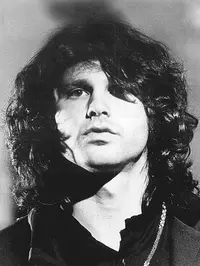
Because Ophiuchus’s date range (Nov 30 – Dec 17) overlaps with the traditional Sagittarius period, a number of well-known names born in this window get informally associated with its themes of transformation, intensity, and reinvention. Taylor Swift (December 13) reflects the sign’s drive for constant creative transformation. Jay-Z (December 4) embodies its intensity and strategic depth. Britney Spears (December 2) mirrors its themes of resilience and reinvention. Nicki Minaj (December 8) channels its passionate, boundary-pushing energy. Jim Morrison (December 8) carried its mystique and pull toward the hidden. Walt Disney (December 5) reflects its transformative, world-building imagination. Ben Stiller (November 30) built a career out of reinventing himself across comedy and drama alike.